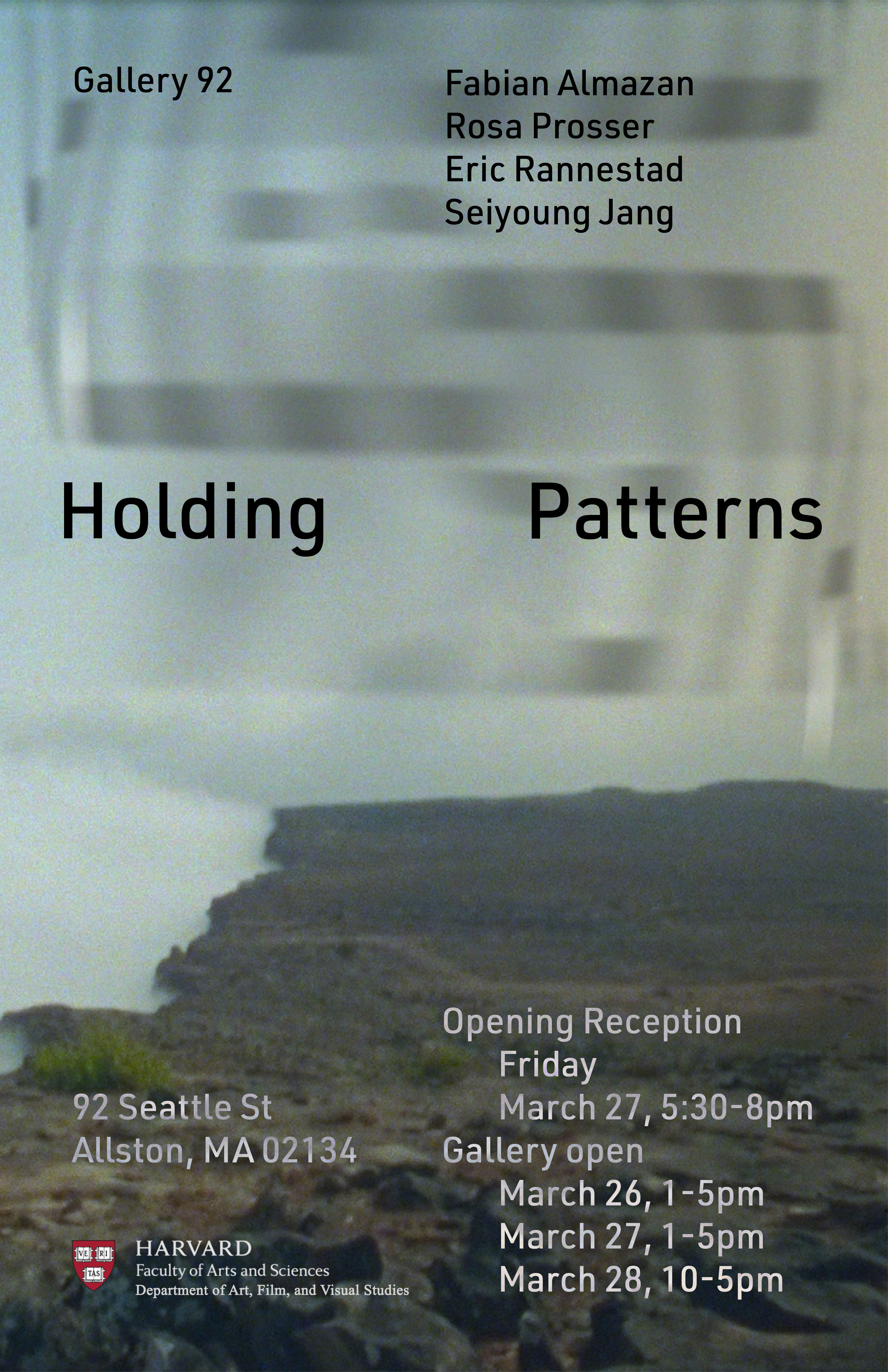
HOLDING PATTERNS
Fabian Almazan, Rosa Prosser, Eric Rannestad, & Seiyoung Jang
Gallery 92, Harvard University, Allston, MA
Opening reception: Friday March 27, 5:30–8pm
Gallery: Thu Mar 26, 1–5pm · Fri Mar 27, 1–5pm · Sat Mar 28, 10am–5pm
Exhibition statement
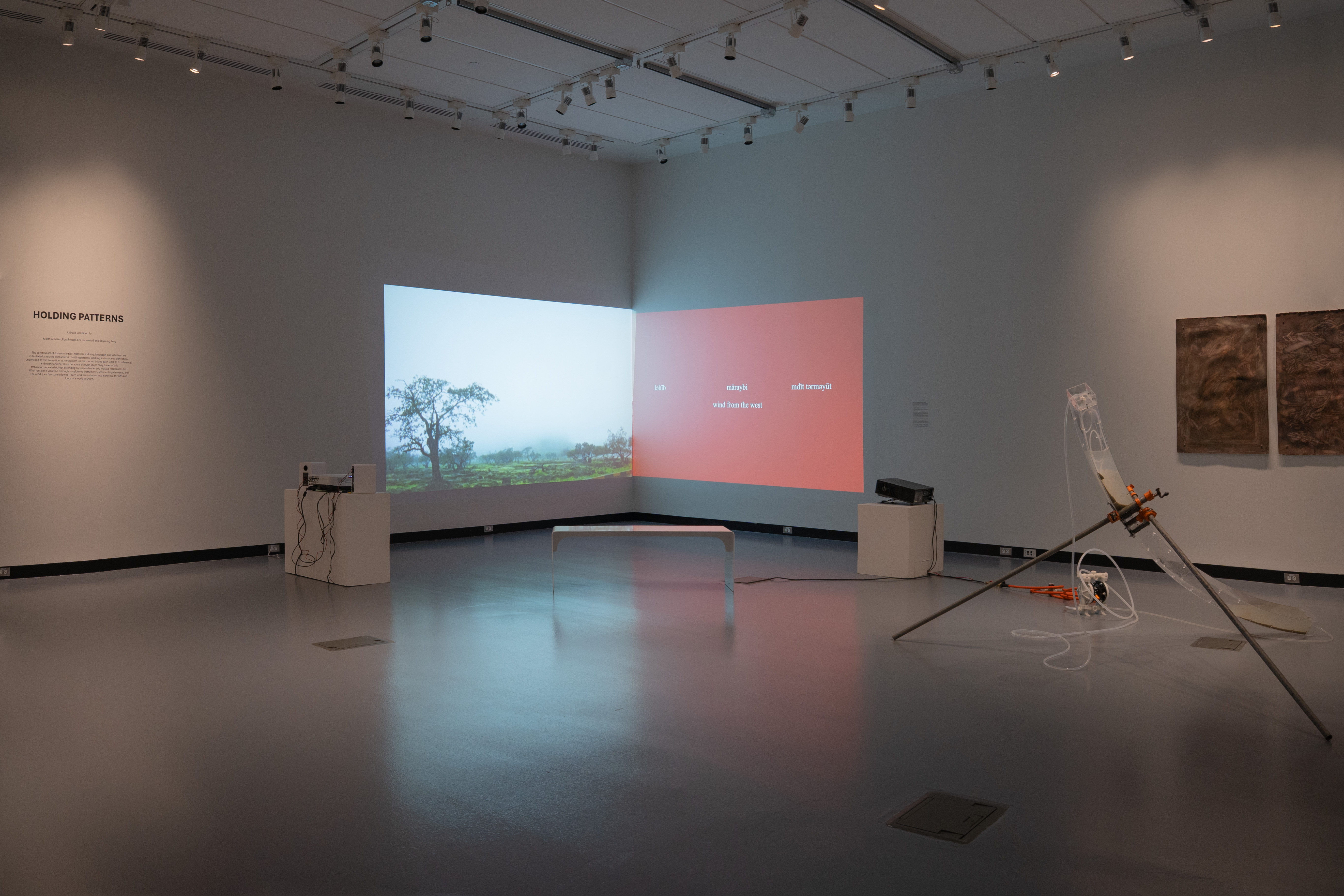
The constituents of environment(s)—materials, industry, language, and weather—are instantiated as related encounters in holding patterns. Working across scales, translation—understood as transformation, as metabolism—is the motion linking each work to its referent(s) and to one another. Reverberations through space carry traces of this translation: repeated echoes extending correspondences and making resonances felt. What remains is vibration. Through transformed instruments, sedimenting elements, and the wind, their flows are followed—each work an invitation into a process, the rifts and loops of a world in churn.
ḤAŚWƐ: clouds seen from a distance before the sea wind comes
In the unscripted language of Mehri—spoken in Dhofar, western Oman—there are 47 words for the wind. To translate these words is to be carried across. Departing from these words, ḤAŚWƐ explores the translations (conversions; transformations; adaptations) between wind, language, and image through the collective documentation of the wind.
In the mountains above Salalah, waiting for the monsoon, clouds signal the arrival of the sea wind, bringing both rain and poetry; the film itself gets swallowed by fog. Mehri is an indigenous and “endangered” language spoken by roughly 200,000 people across western Oman, eastern Yemen and parts of Saudi Arabia. Significant changes in the language use have occurred since 1970s, “with a hitherto overwhelmingly rural population becoming rapidly urban, and a significant nomadic population becoming almost wholly sedentarised.” (Al-Mahri & Watson, 2016: 89). Janet Watson and Abdullah Musallam Al-Mahri detail how language and nature are intimately tied in Dhofar; as people move indoors, use of the language and words in circulation have changed.
This project forms an (ongoing) correspondence and collaboration between linguist Janet Watson and filmmaker Rosa Prosser. Wind words and poems are spoken by Husayn Mahsan al-Mahri and Sulaiman al-Mahri.
Translation (and its limitations, for “nothing is translatable; nothing is untranslatable” (Derrida, 2001: 178)) has been central to the project, raising the questions: how do we translate the wind? How do we translate an image? One attempt at translating the images has been putting them into circulation—reshooting, “translating” onto 16mm, reshooting onto digital and back again—allowing them to abstract and transform in different ways. As the project continues, this process is something we are hoping to experiment with and develop further.
Taking translation as a process—traveling; travailing—a “go-between”, moving across language, time, and space; with this definition, “translation” also takes the form of the wind.
As the wind passes through the parameters we have drawn, we give it a name; in that naming, it comes to make a place.
Metabolics
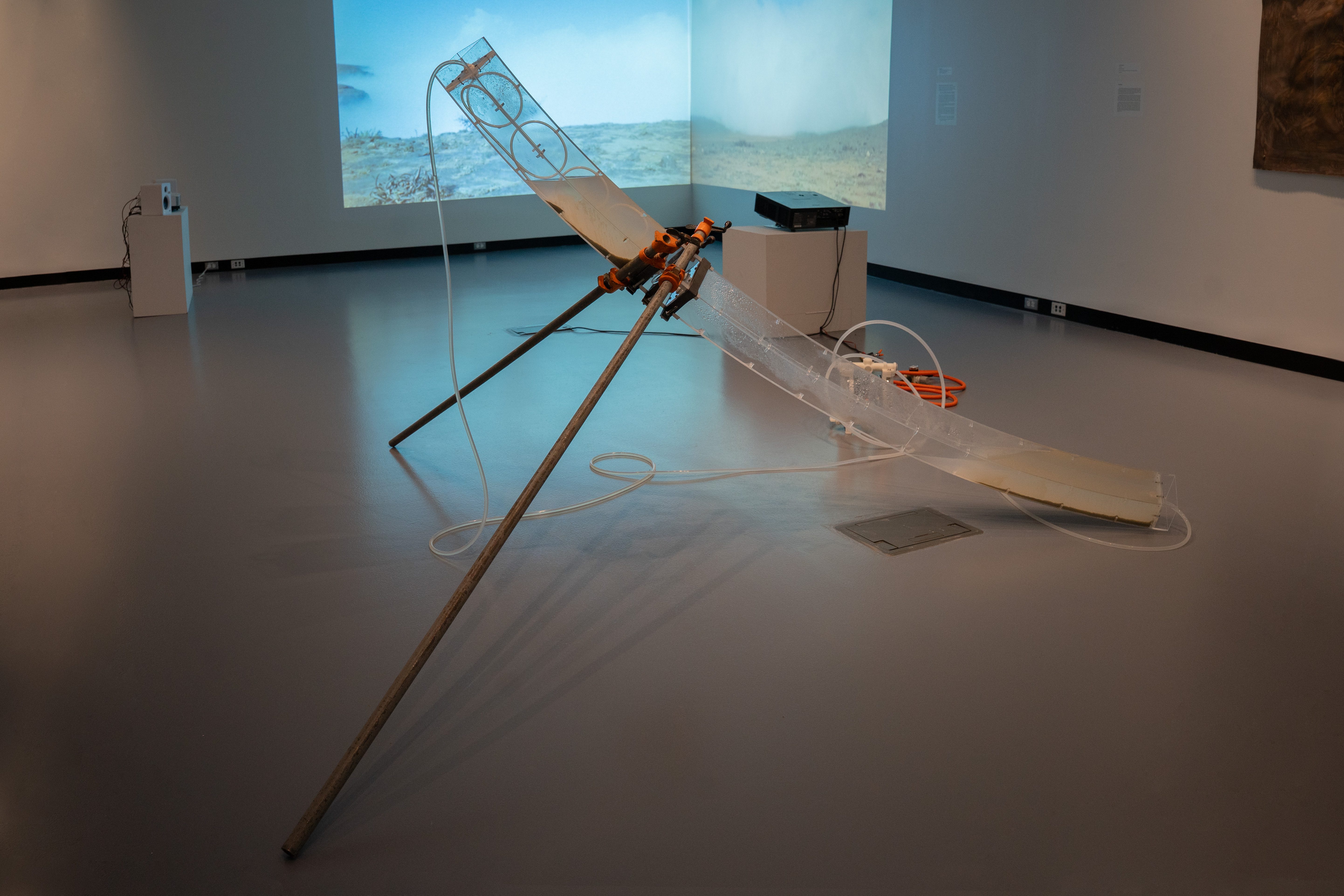
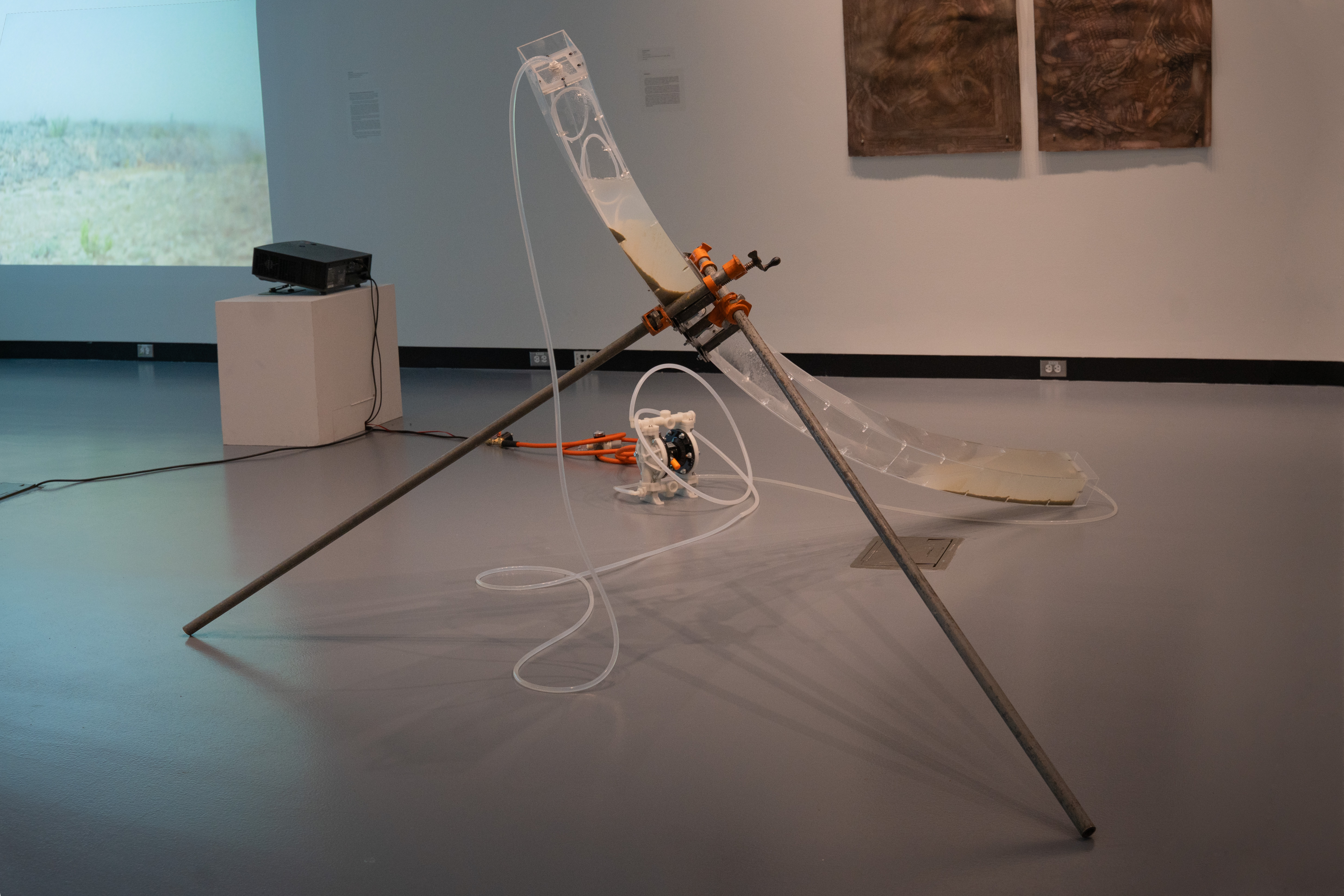
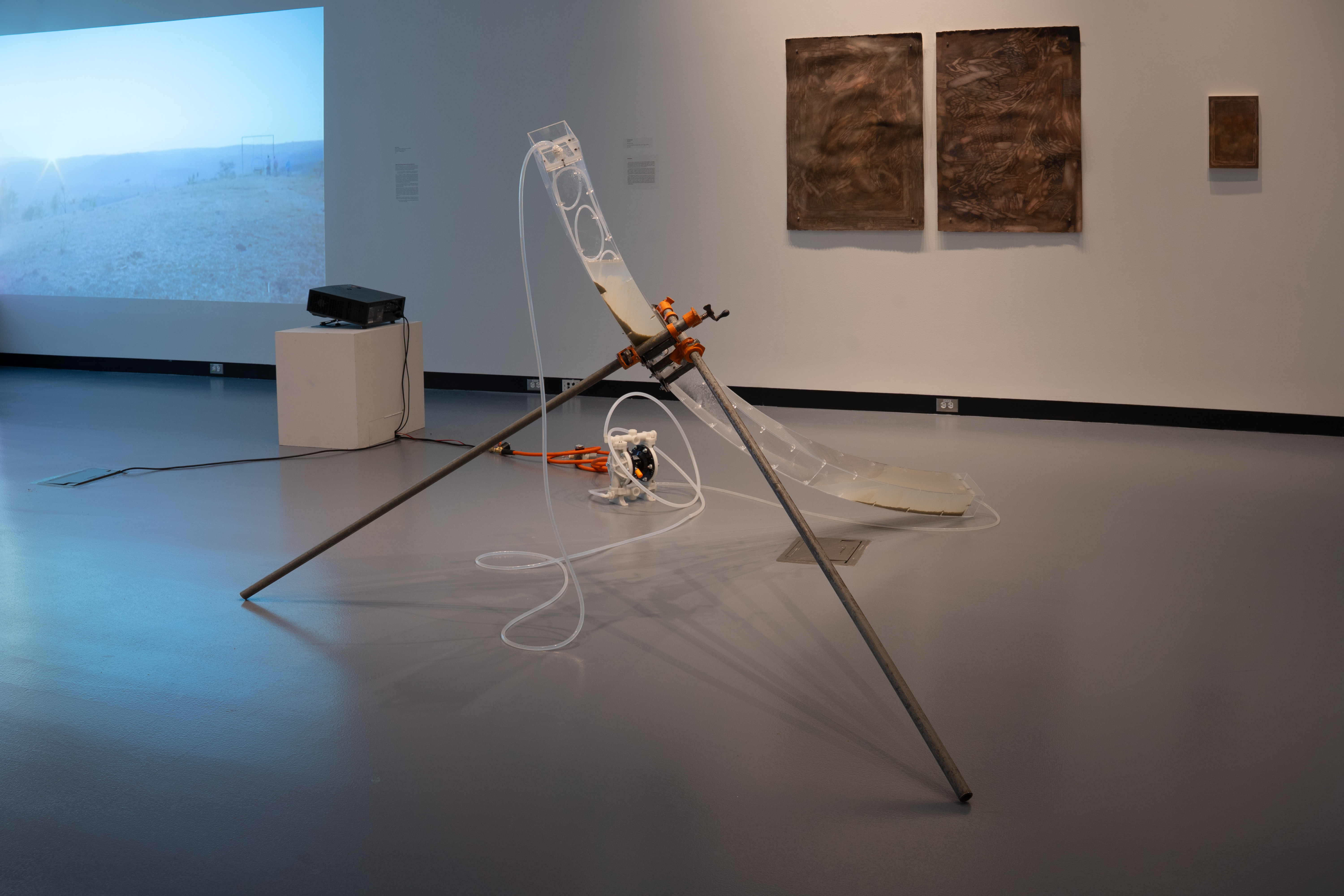
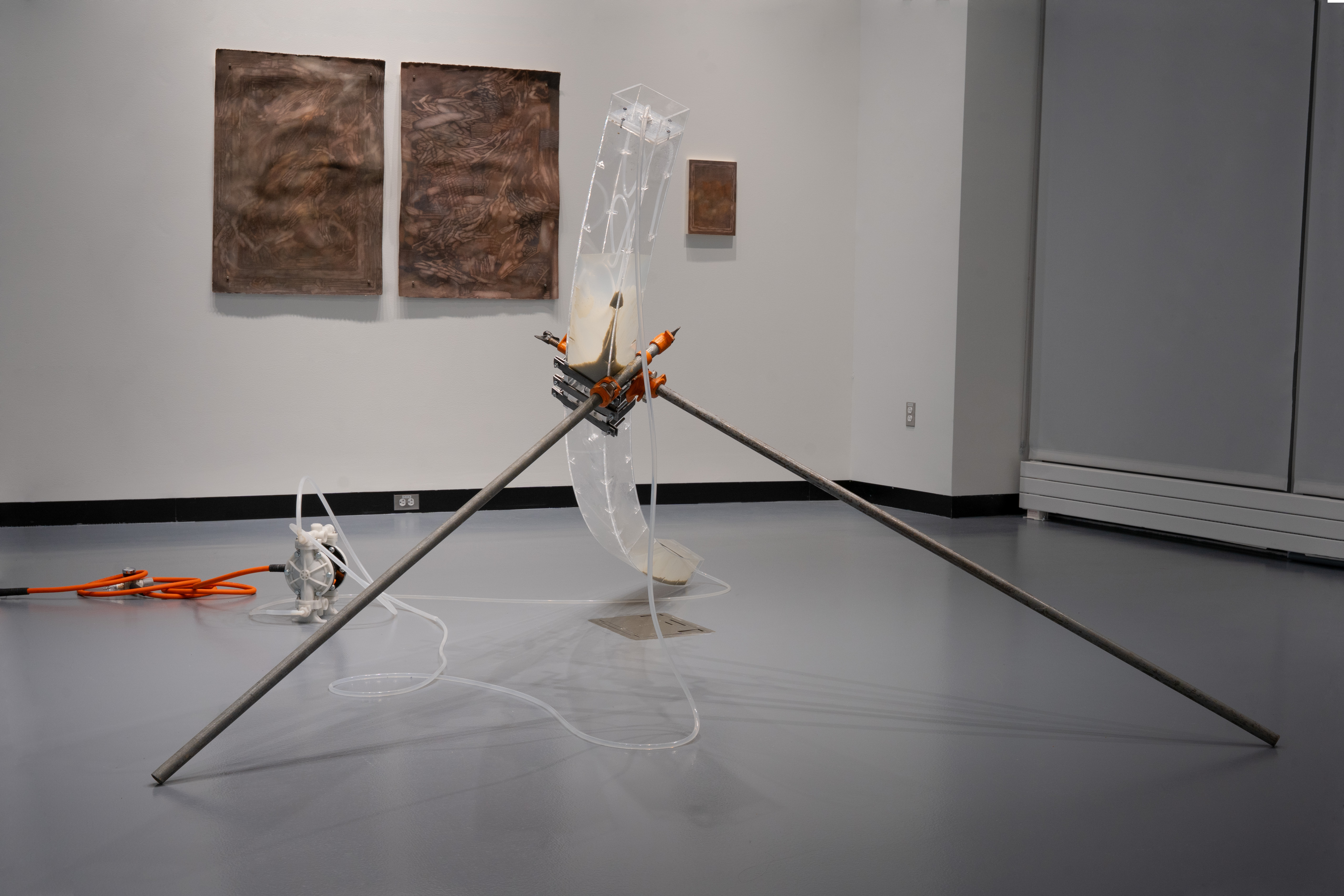
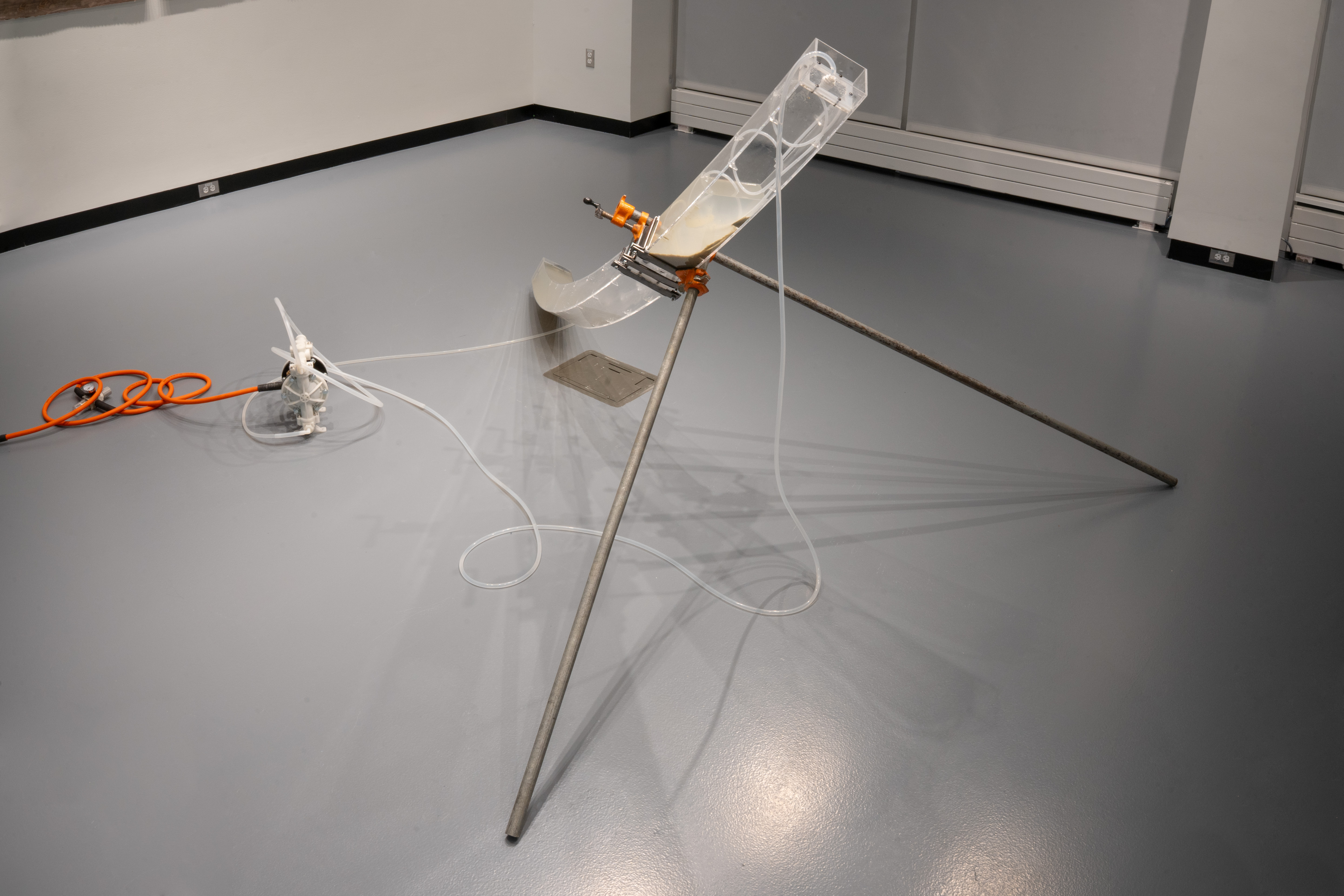
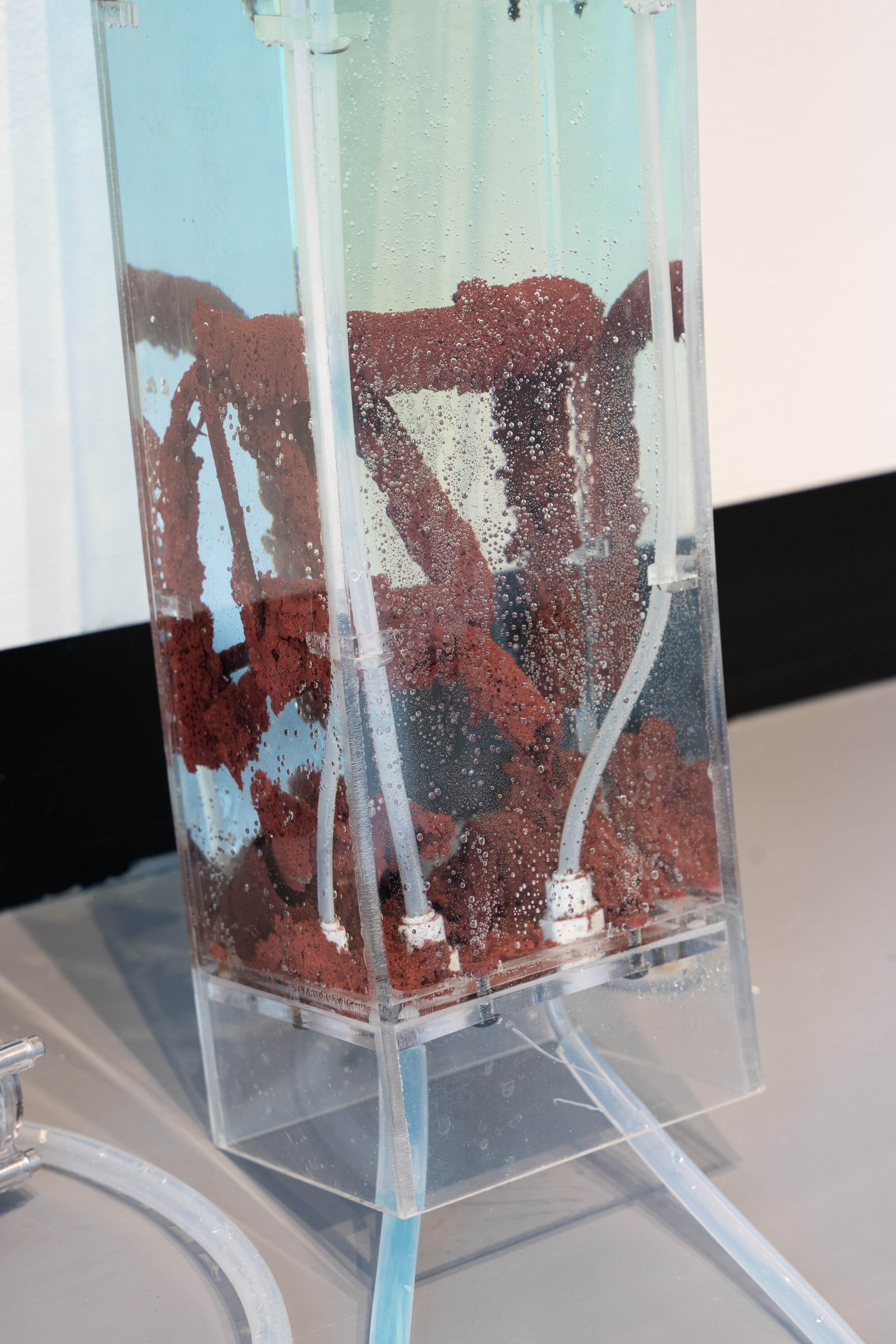
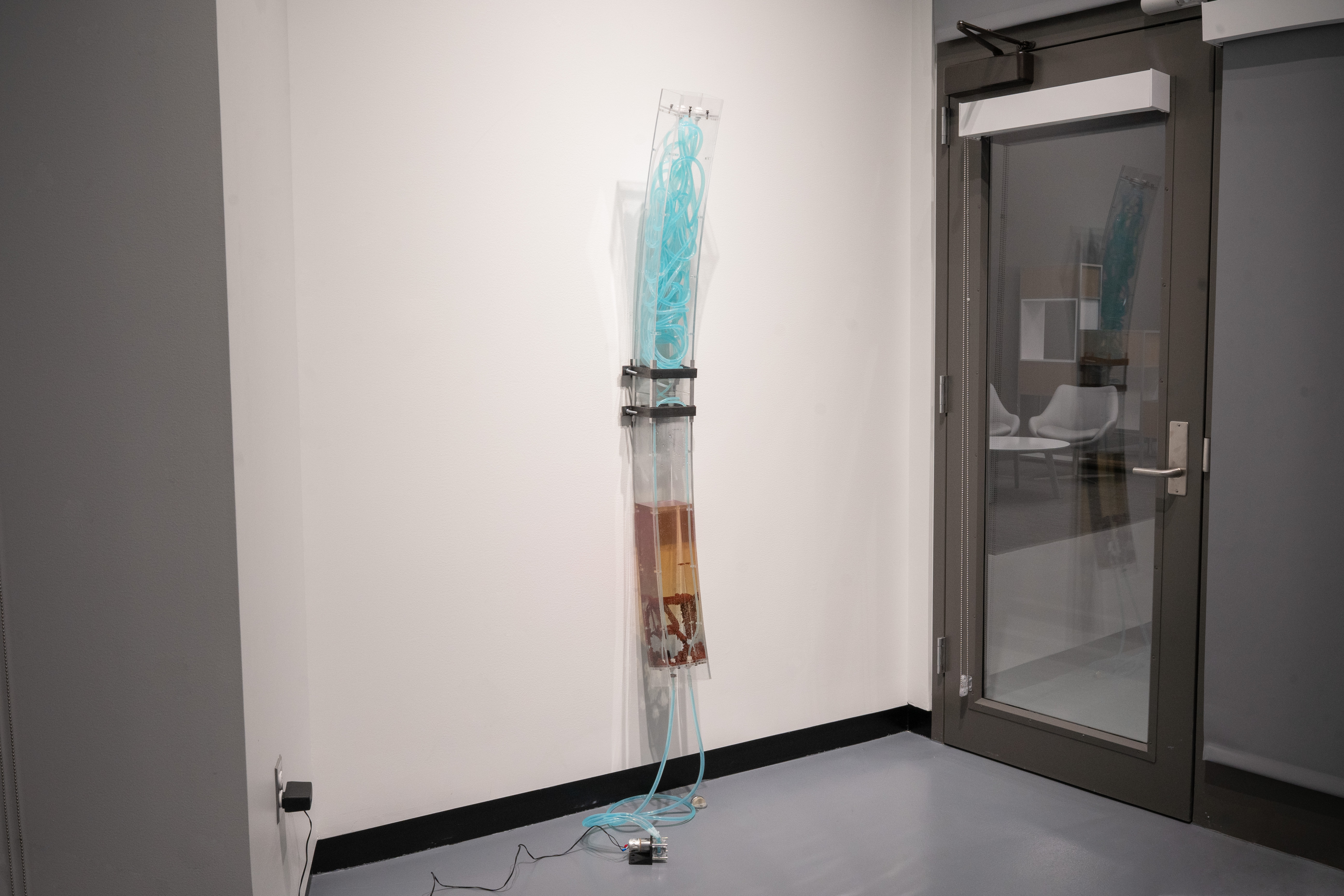
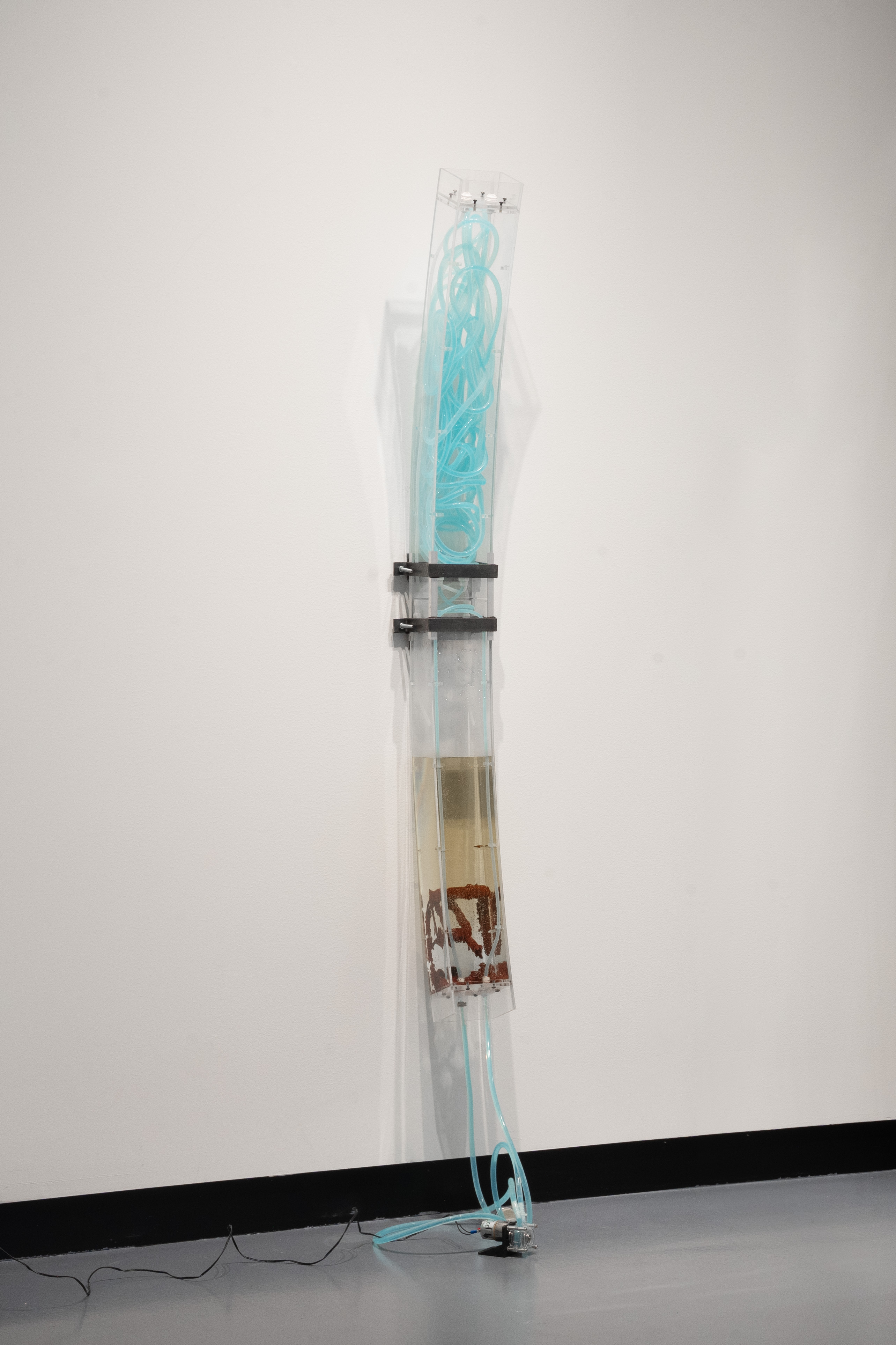
Across modes of representation that span painting, sculpture, and digital media, this series explores the precipitating demands of digital infrastructure and its growing consumption of land, minerals, water, labor, and capital. The works cite the various cultural and material metabolic processes of image formation today: the rifts and loops of a world churning.
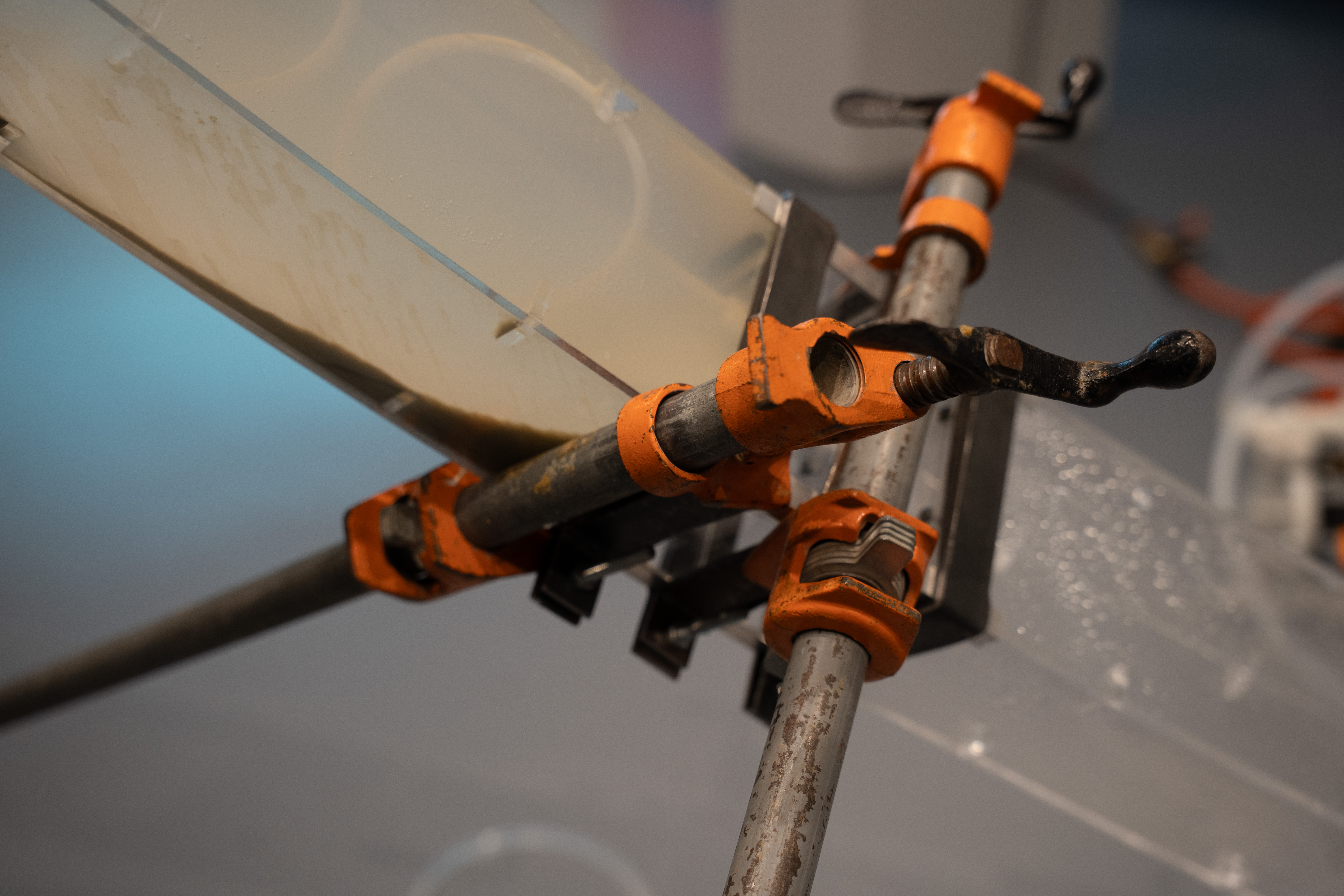
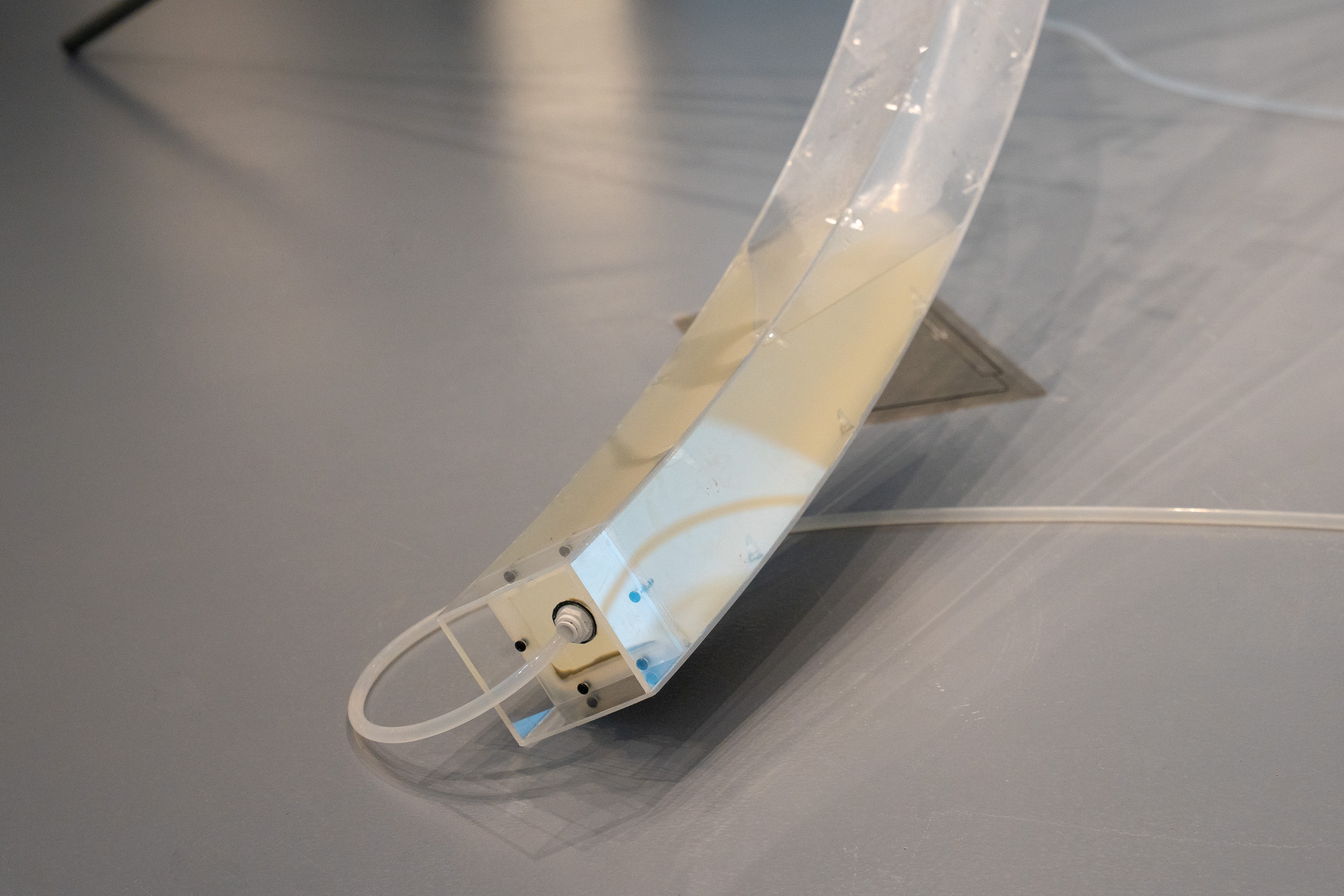
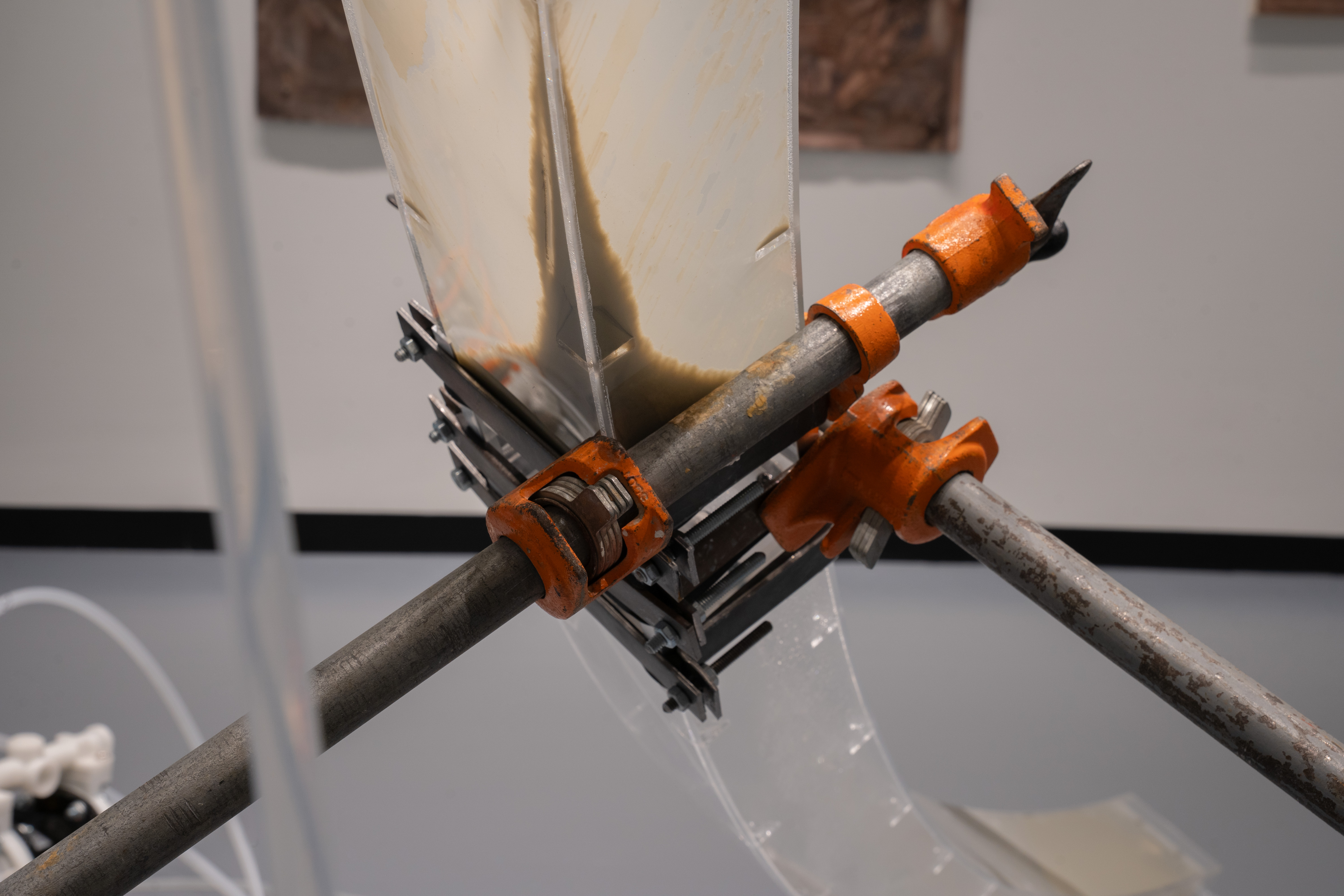
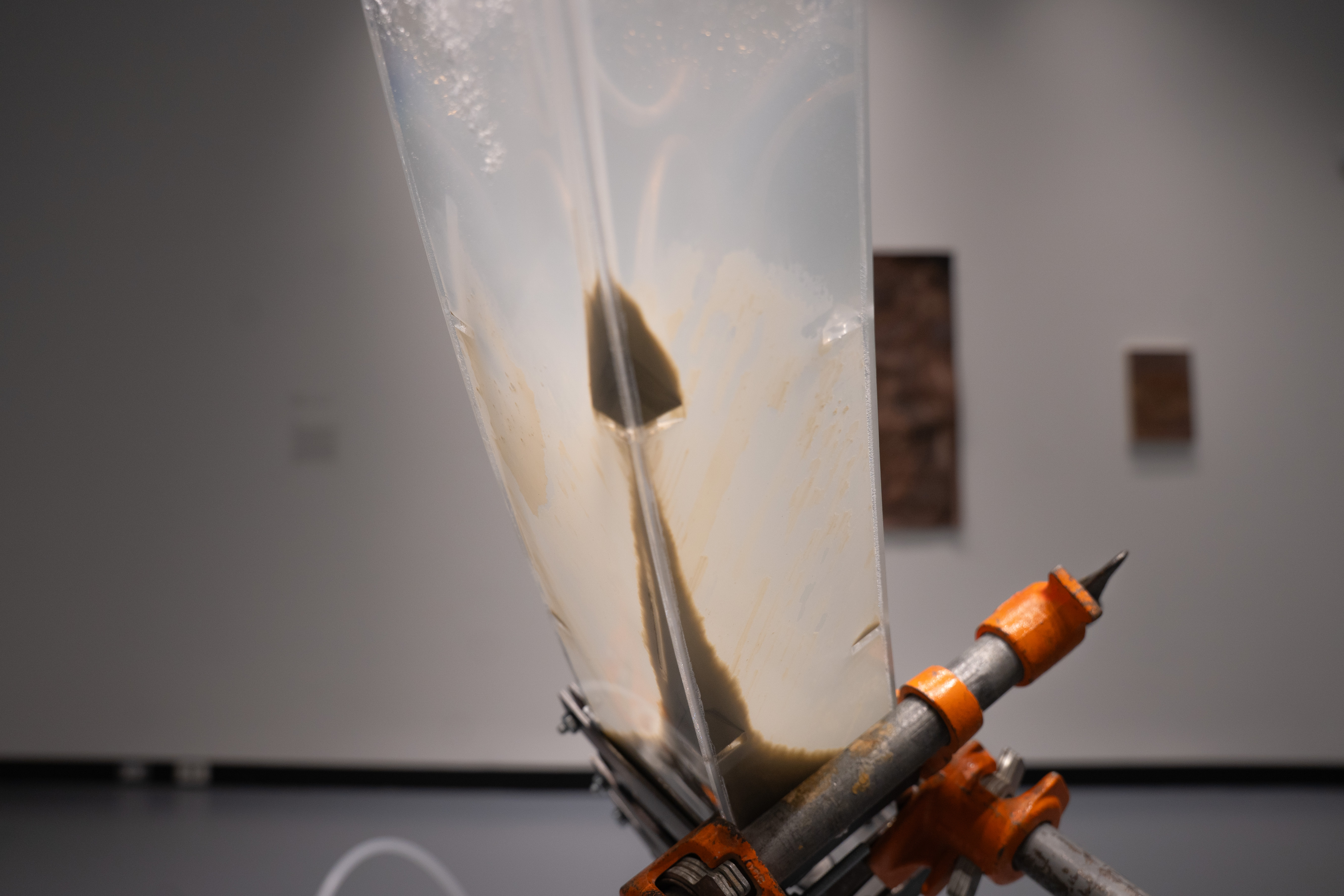
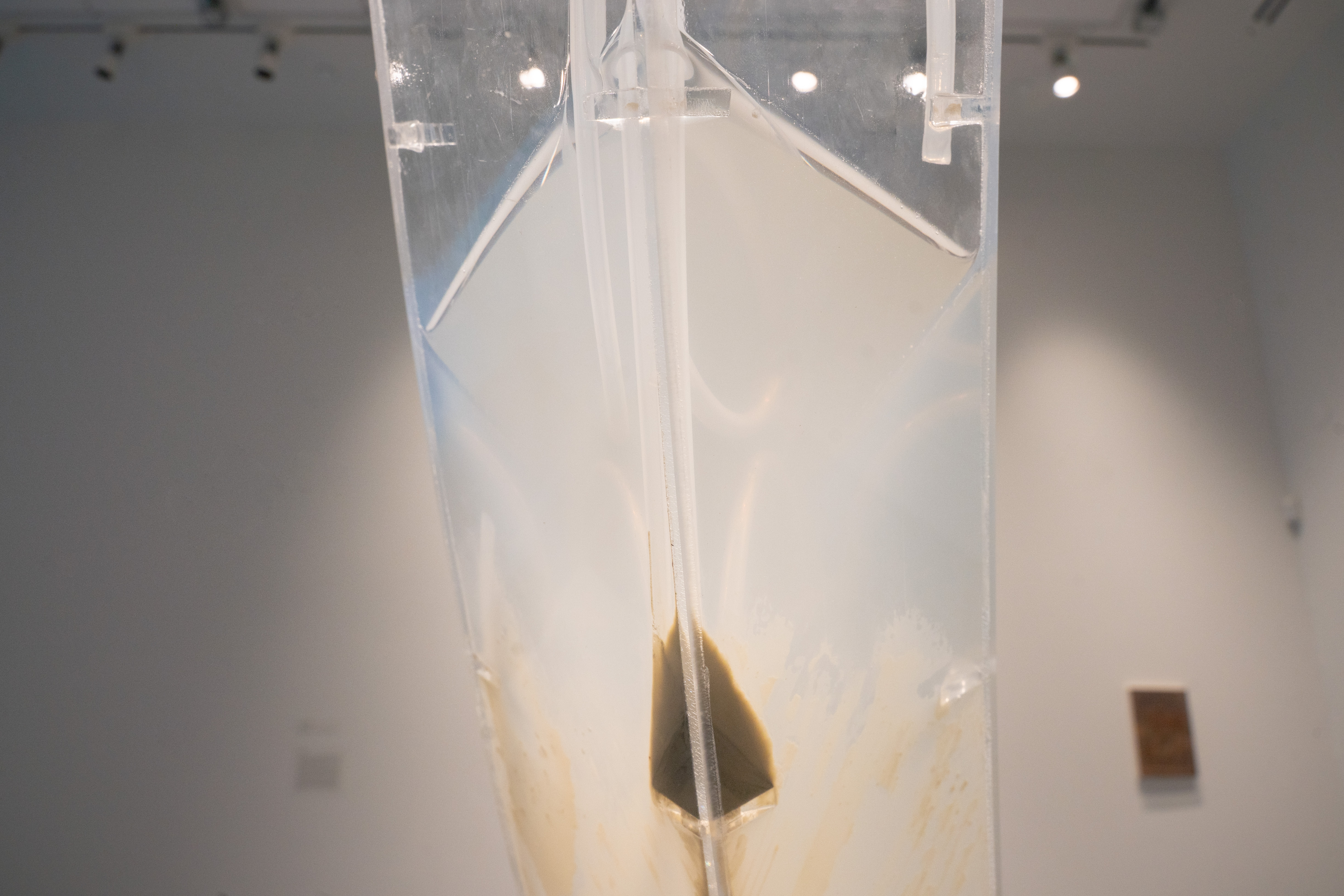
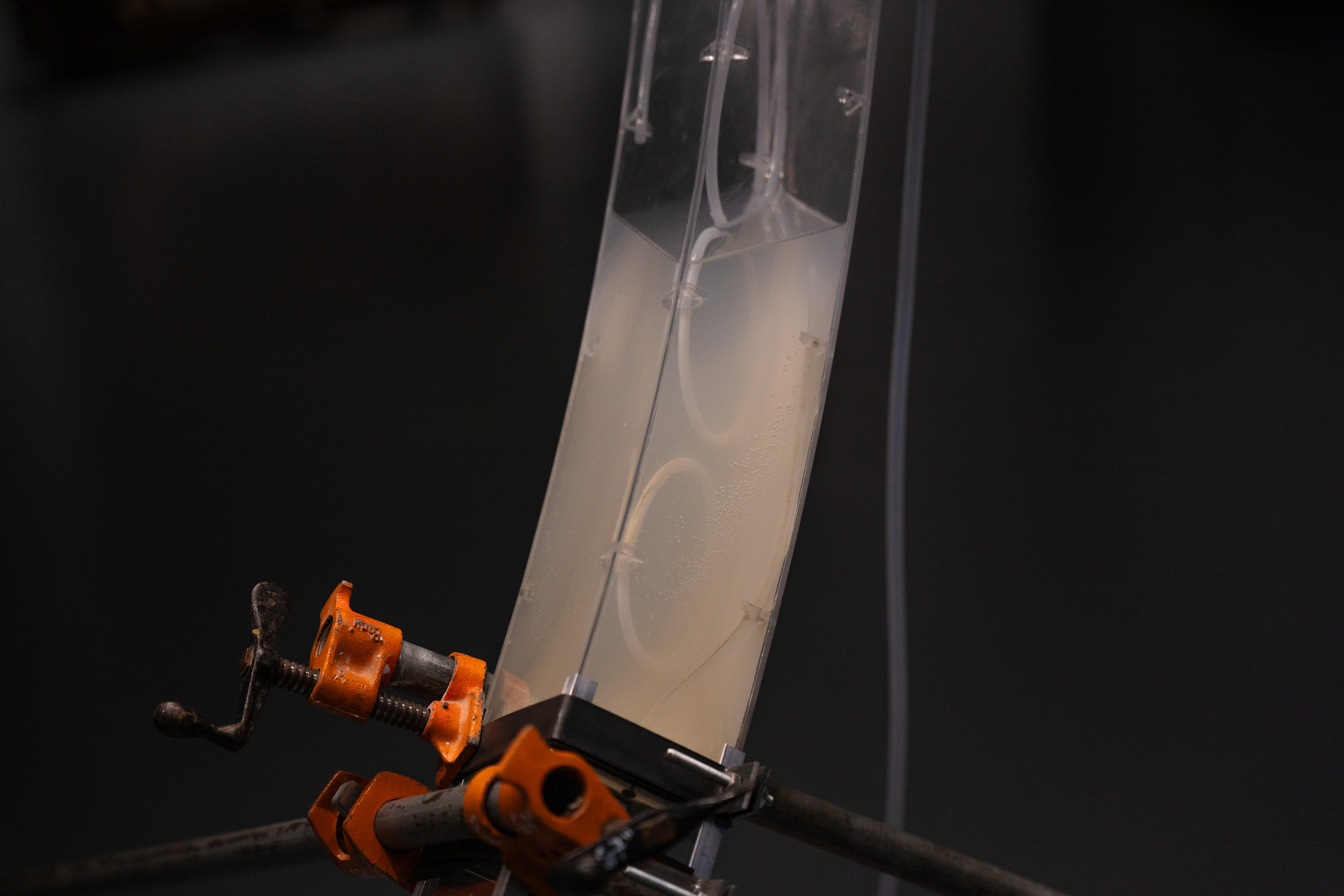
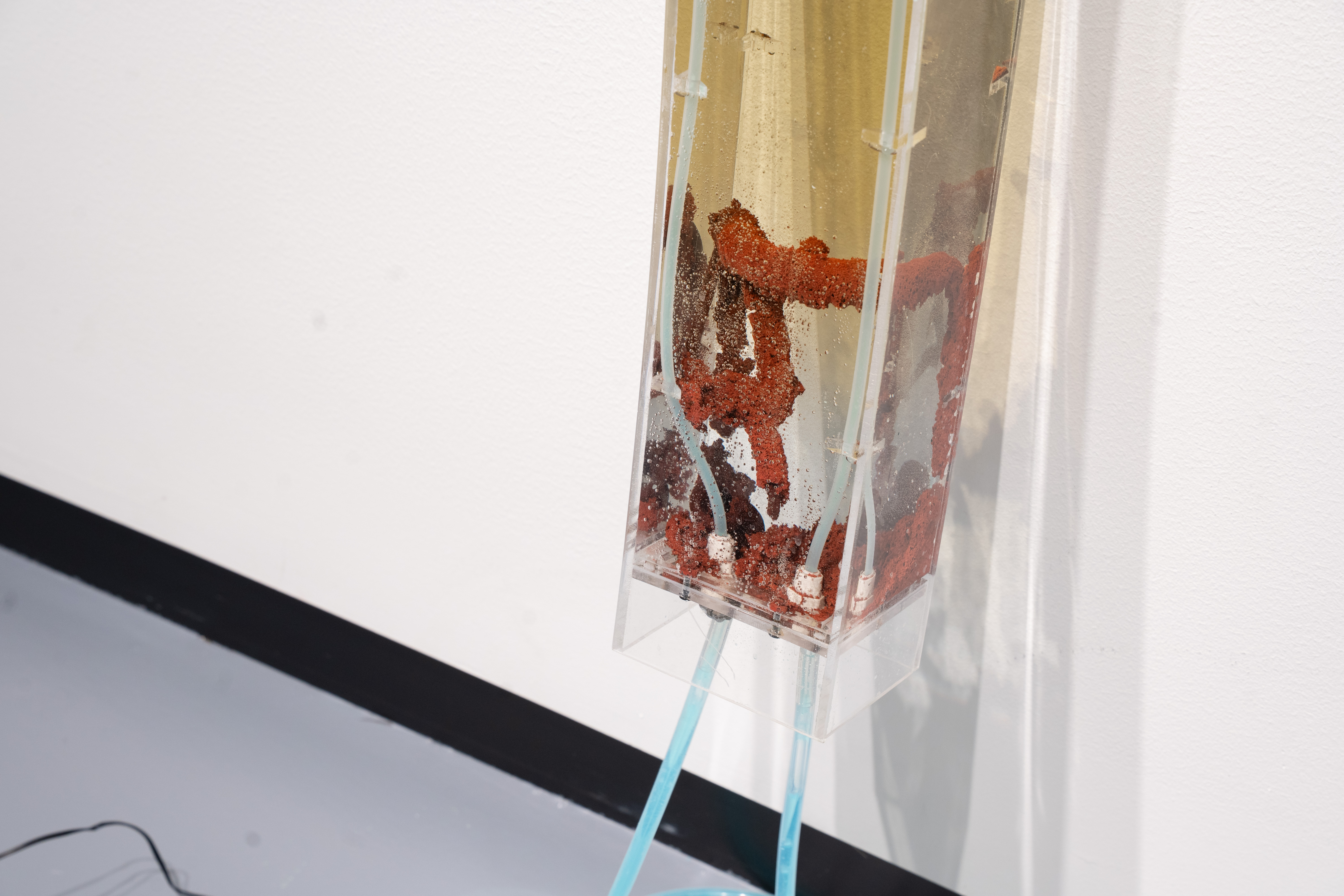
Occupying the floor of the gallery is a series of tanks, tubes, and pumps that explore the logics of industrial capitalism, its loops, false loops, and metabolic logics. Dissolved copper is circulated through an internal circuit and pumped over iron objects in a process called cementation. At various stages these copper sediments are gathered as pigments in the show’s watercolor paintings.
The project grounds itself in the material processes and chemical flows of Butte, Montana, a storied industrial town now home to an acidic lake of mine tailings. In an effort to secure a supply chain for rare earth elements used in digital infrastructure and defense technologies, the U.S. federal government has begun to reframe Butte’s water bodies as geopolitical asset: latent pollution as a metal-rich orebody. As we begin to consume this second-order material, the model of extraction folds inward on itself, further entering its own synthetic space.
The Silence that Follows
This work emerges from a musician’s relationship to the natural world and to the living systems and materials that make life possible. It reflects on climate change and on what happens when the ecosystems that sustain both life and art are pushed toward collapse. The instrument here is part of nature itself, shaped from organic and earthly matter. Its silence echoes the broader silencing of diminished natural habitats, species, and balance in the face of environmental crisis.
In Cuban Palo Monte, an Afro-Cuban spiritual tradition with Central African roots, an nganga is a ritual vessel: a container of earth, metal, wood, bone, and other natural materials, assembled and consecrated through ceremony. Palo Monte centers a profound relationship with the forces of nature and with ancestral presence, understanding material elements as living carriers of spirit and history. Within this practice, the nganga functions as a bridge between the world of the living and the dead, a site where communication, memory, and power converge. Here, an upright piano becomes such a vessel. Its keys are removed and laid inside its hollowed body like bones. The instrument is transformed from a site of touch and music-making into an object of containment. It can no longer be played in the traditional sense.
Through two speakers mounted against the soundboard, recordings of political speeches denying or minimizing climate change are played at low volume. The spoken frequencies travel through the wood and strings, activating faint sympathetic vibrations. The piano does not perform music. Its voice has been obstructed, yet it continues to resonate involuntarily. This instrument stands between sound and silence, between human action and its environmental consequences. What remains is vibration—faint and unsettled. Music, as we know it, has receded, leaving behind a lingering resonance, a trace of what once could fully sing but no longer can.